Home / Vāstu: Breathing Life into Space / Chapter 4
Expansion and Contraction
This chapter supplies the philosophy beneath the practice. Vāstu reads the world through Sāṁkhya, the classical Indian system of how the One Reality expands into matter and contracts into limitation. Svoboda develops the idea — expansion (creation, possibility) and contraction (limitation, definition) — then grounds it in a long, practical case study: helping a friend rearrange her living room by asking four simple questions.
 The book's chapter-opener motif — a figure within a grid (p87).
Sāṁkhya
Like Āyurveda and Jyotiṣa, Vāstu reads the Law of Karma through the Sāṁkhya Darśana. Sāṁkhya means "number"; the philosophy is built of tattvas ("thatnesses," principles) that evolve from one another. The first is the Supreme Singularity — the One, transcendent consciousness beyond time, space, and causation; every other tattva is a permutation of that One, which remains even when the universe dissolves. Darśana ("philosophy") literally means "seeing," and seeing is creative: how we see the world generates our worldview, which generates how we see (Svoboda ch.4, p87–88). [traditional]
From Sāṁkhya's view the universe is beginningless and eternal, manifesting and un-manifesting in cycles, waxing and waning like the moon. Unmanifest, it is a dimensionless Singularity of pure consciousness; creation begins with "a sudden, unimaginably furious initiating expansion" that brings space, time, and causation (karma) into being — a "Big Bang" strikingly like the physicists', except that for Sāṁkhya the Absolute is never destroyed: the universe rises from It and dissolves back like waves on water, leaving the deep undisturbed. What sets it off is the Absolute's craving to experience itself — and that desire was our universe's founding karma. Desire is the foundation of both macrocosm and microcosm; in humans it becomes the drive to create and procreate, from which emerge the made things that are Vāstu's domain (Svoboda ch.4, p88–89). [traditional]
Life and limitation
That first creative explosion was "the first-ever Vāstu event," because it partitioned a Singularity of consciousness. Sāṁkhya names the portion of the One that comes to see itself as separate prakṛti (nature), and the awareness that still remembers All-is-One puruṣa. Prakṛti's nature is to limit, to finitize: before the "Big Bang" any configuration is conceivable; after it, limitations arise and fix. So too a human begins as a single cell holding every potentiality, then explosively expands into a form that grows, plateaus, and dies — the microcosm unfolding as the macrocosm does (Svoboda ch.4, p89). [traditional]
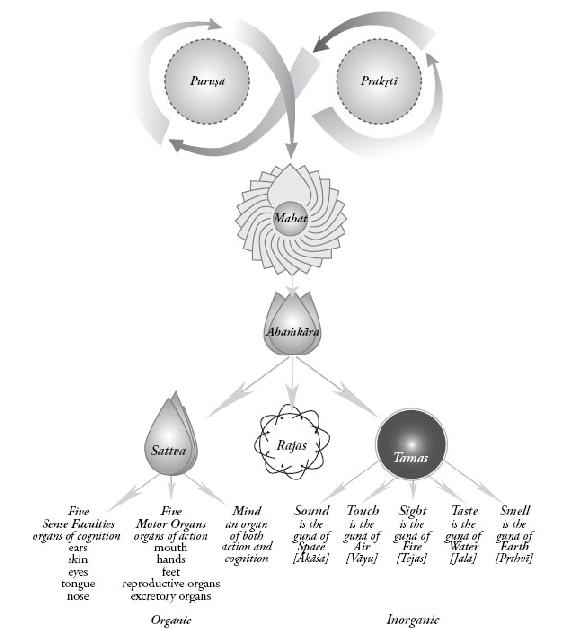 Evolution according to Sāṁkhya (p90): Puruṣa & Prakṛti → Mahat → Ahaṁkāra → the three guṇas (Sattva, Rajas, Tamas) → on the organic side the five sense-faculties, five motor-organs, and mind; on the inorganic side the five subtle objects and their elements — Sound/Space, Touch/Air, Sight/Fire, Taste/Water, Smell/Earth.
Evolution is therefore paradoxical: even as the macrocosm projects outward into billions of galaxies, limitations accumulate within it, narrowing its future; a baby's range of possibilities likewise contracts with every cell it adds. Churches, houses, and parks develop just like children and cosmoses — an open space enjoys free development until boundaries and constraints appear, and each constraint contributes the attributes that define the space (limit some characteristics and you get form; circumscribe others and you get color). In Vāstu terms, prakṛti is the "residence" the universe is building for puruṣa (Svoboda ch.4, p92).
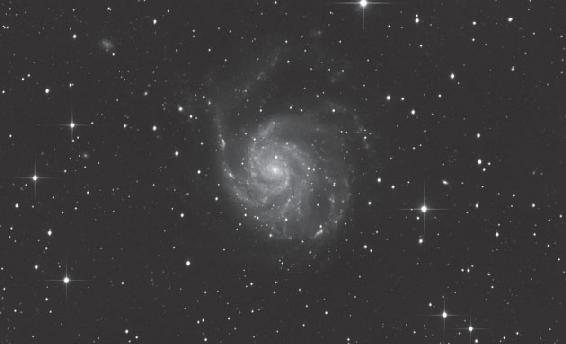 Waxing macrocosm (p91).
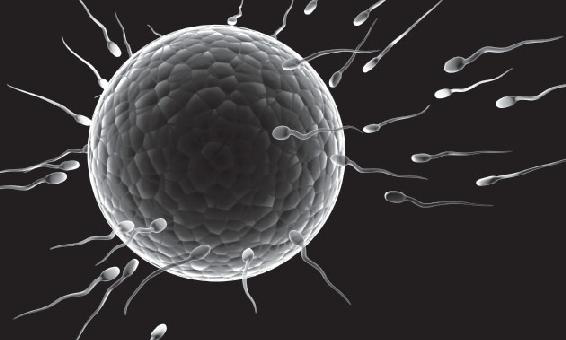 Protoplasmic gravity (p91).
Evaluating a space: residence and residue
To evaluate a space, begin "at the great divide between being and nothingness" — Alfred Jarry called God "the tangential point between zero and infinity," which evokes the puruṣa–prakṛti relation. The aim is the right balance of zero and infinity in color, form, texture, density, and detail. This balance is mutable; no puzzle of life has a perfect, permanent solution — each must be repeatedly re-calibrated. The work is to spot duḥkha (bad space), find its cause, apply a remedy, and recognize when sukha has returned (Svoboda ch.4, p92–93).
A "residence" (house, office, room, garden) must always be read both from its own perspective and from that of its "residue" — everything around it that it is not. So Vāstu's first question is "What can materialize in this space, and how can it do so?" (Are we building a mansion or a mortuary? a bedroom, a study, or a playroom?) The answer of intention guides everything after, like the Big Bang seeding an endless chain of cause and effect. This mirrors a drawing exercise: render an object by drawing the negative space around it (the residue) rather than the positive space it occupies (Svoboda ch.4, p93–94).
After emerging from Oneness, prakṛti craves reunion with It; that craving drives all manifestation. Prakṛti's self-reflective intelligence is mahat, which evolves into individualized self-awareness, ahaṁkāra (see chapter 3). In Vāstu, ahaṁkāra turns the mass we put in a space into discrete objects and asks the design questions. Embodied life, Sāṁkhya says, is the Five Great Elements, the five subtle sense-objects, the ten senses, the mind, ahaṁkāra, and mahat all functioning as one — galvanized by puruṣa acting within prakṛti. Of these, Vāstu attends most to Earth (the solid, tactile realm — the end of prakṛti's move away from puruṣa) and Space (the most rarefied "matter" — prakṛti's path back toward puruṣa); only Earth can partition Space into residence and residue. Both are understood by being felt, which is why gardeners take to Vāstu readily — "if you can cultivate a carrot, you can cultivate a cosmos, or a cottage" (Svoboda ch.4, p94–95).
The four questions to return to whenever you lose your way with a space (Svoboda ch.4, p95):
- What can materialize in this space, and how can it do so?
- How full should this space be, and how empty?
- What items should fill this space, and how should they be arranged?
- What qualities should these items possess, to achieve the results desired?
Marie: space and the personal myth
Svoboda illustrates all this with an afternoon at the Florida home of a friend, "Marie," a nurse. Two kinds of effect link us to our spaces: a passive effect (from the qualities of the space itself) and an active effect (from the relationship we build with it) — and both turn on our "personal myth." Marie confirms from nursing that patients who tell a doom-laden life-story tend not to heal, while those who recall their blessings more often recover. An "invalid," Svoboda notes, holds an "in-valid" self-image; Āyurveda, Jyotiṣa, and Vāstu each work by re-validating a person's life story — Āyurveda in therapeutic terms, Jyotiṣa in astrological ones, and Vāstu in the language of space, form, color, and texture (Svoboda ch.4, p96).
We all construct personal myths — stories of ourselves that pilot us through life and, as they express themselves, reshape the spaces of body and mind, mapping the paths our prāṇa follows. Every living space tells its owner's story (Marie keeps house unlike her mother or sister; her son and daughter reveal their personalities in how they arrange their rooms). Since we shape our space and it shapes us back, changing the arrangement of a house can change the personal myth. And reality comes first: as Vimalananda warned, "It's always better to live with reality, because if you don't, you can be sure that at some point reality will come to live with you." So Vāstu has you first perform the karma of visualizing in detail what you want, and only then the karma of materializing it — making your changes of plan at the blueprint stage, not mid-construction (Svoboda ch.4, p96–98).
Marie's living room — the four questions in practice
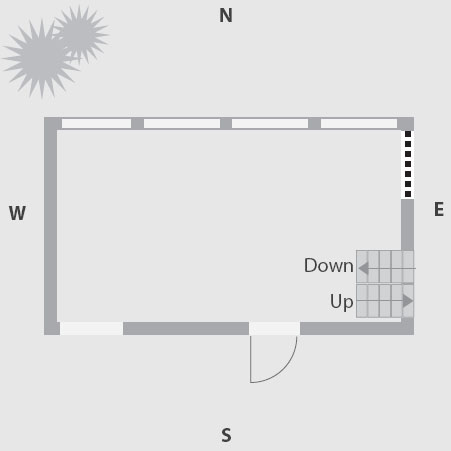 Marie's living room (p100): windows on the north, the south door, the up/down staircases at the east, and the railed "precipice" overlooking the entry (dotted line).
Walking the four questions, Marie decides the room should materialize the family's center for living; that it should be about 30% full (just full enough to promote living); then what should fill that 30% and how it should be arranged; and what qualities those items need (Is the sofa meant to be sat on? Is the piano played enough to earn its place? cactus or hibiscus? rug or carpet?). The discipline is to let the questions come first — "much of the time they'll bring their own answers with them" (Svoboda ch.4, p98–100).
The room itself is a rectangle 18 ft × 14½ ft, its long axis roughly east–west, with windows filling the north wall — good, since Vāstu wants light entering chiefly from the north and east. They empty the room (except the heavy piano) and test where the piano belongs. Every option fails for a felt reason: on the north wall it blocks light and the player faces outside; on the east the player sits over the railed "precipice" down to the entry, so attention-prāṇa "takes a dive," and the adjacent staircases are "too rajasic, too mobile" for concentration; in the south it is wedged between two "prāṇa thoroughfares" (the dining-room opening and kitchen door); the corners waste a triangle of space. So the piano stays on the solid west wall, where it had been all along — now for understood reasons (Svoboda ch.4, p101–103).
The room's center
The dog, Lucy, always claims the middle of the room — and her instinct is right: the center of any room is its real power spot. Each built space is a small universe whose center emulates the cosmic center from which existence radiated — puruṣa in the macrocosm, the zygote in the embryo, the navel (and the nearby hara, the body's center of gravity) in the developed human. Prāṇa radiates out from that hub and returns to it. A structure breathes the same way — prāṇa moving from the center out into the building and back, from the unity of Space into the multiplicity of Earth and back — so health, in human or habitat, asks that the space around a structure's center be kept as free of obstruction as possible (Svoboda ch.4, p103–104).
Rearrangement
With two constraints fixed — keep the center open, keep the piano on the west wall — and given the room's quirks (two staircases, the precipice, the kitchen and dining doors), the rest follows: the north wall left open under its windows to admit light and energy; the sofa repositioned along the eastern railing as a gentle energy "dam"; the cactus relocated out of the northeast corner. Adding the furniture back one piece at a time reveals the room's "differential fill potential" (here modest, because of the structural irregularities). The moment it is agreeably arranged, Lucy reclaims her central spot (Svoboda ch.4, p104).