Home / Vāstu: Breathing Life into Space / Chapter 2
The Vāstu Vidyā
Where chapter 1 argued that space matters, chapter 2 asks what kind of knowledge Vāstu is. Svoboda frames it as the "yoga of space," one of a family of Indian vidyās (living sciences), and sketches its history, its core texts, and the right attitude for studying it.
 The book's chapter-opener motif — a figure within a grid (p39).
Vāstu, the yoga of space
The Bhagavad-Gītā defines yoga as "skill in action" (yogaḥ karmasu kauśalam) — kauśalam meaning easy grace, natural proficiency, flow with minimal effort. [classical] Yoga, in this sense, is whatever "unknots kinked prāṇa" and furthers its circulation. So Vāstu is the yoga of space: the study of aligning ourselves skillfully with our spaces. Where most yogas cultivate prāṇa by turning attention to the inner spaces of body and mind, Vāstu works on the outer spaces the body-mind occupies — and Vāstu, Haṭha Yoga, Āyurveda (Indian medicine), and Jyotiṣa (Indian astrology) all pursue the same end by different means: to align a person more perfectly with their own prāṇa and the prāṇa of their environment (Svoboda ch.2, p39–40).
A vidyā is "a subtle, all-powerful energetic intelligence, a dynamically active consciousness" — in Sanskrit a śakti. [traditional] By persistent veneration a practitioner can develop a personal relationship with a vidyā, at which point the impersonal vidyā becomes a personalized deity, a goddess who acts through the devotee to promote concord. At bottom a vidyā is an extension of the natural human knack for feeling the rightness or wrongness of things; everyone has an intuitive feel for balance and imbalance in space, and can access Vāstu's basic principles. Follow Vāstu's prescriptions to the letter and you can be a competent architect; you become a master builder (sthapati) only when you become a vehicle for the Vāstu Vidyā through spiritual practice. "Architecture is frozen music," said Hassan Fathy — harmony solidified into matter (Svoboda ch.2, p40).
Vedas and vidyās
Vāstu, Āyurveda, Jyotiṣa, and Yoga all originate with the Vedas, India's compendia of sacred wisdom for establishing order on earth and in the heavens through ritual. The many vidyās are "simultaneously many and one": varied paths that lead to a realization of the Unity of all existence, each addressing one facet of the sukha equation. They interlock — Āyurveda tells you what and how to cook, Vāstu where to put the kitchen; Jyotiṣa advises when to hold an event in an assembly-space that Vāstu has defined. A true authority in any one vidyā knows the elements of all the others; Dr. V. Ganapati Sthapati holds that any sthapati worth the name should command at least four — Śabda (rhythm, chanting), Nāṭya (dance and drama), Gandharva (music), and Sthāpatya (architecture and sculpture) (Svoboda ch.2, p40–41).
The vidyās can be pictured as muses — divine personifications of inspiration in a field. Āyurveda is the Āyur Vidyā, muse of life; Jyotiṣa the Jyotir Vidyā, muse of light; Vāstu the Vāstu Vidyā, muse of objects and spaces. They embody themselves in the humans who serve as their vessels, gaining fluency with each transfer between generations, and live in symbiosis with those conduits — feeding on our attention while nourishing our imagination. The effortlessness of a true expert is the muse's own fluidity acting through them (Svoboda ch.2, p43).
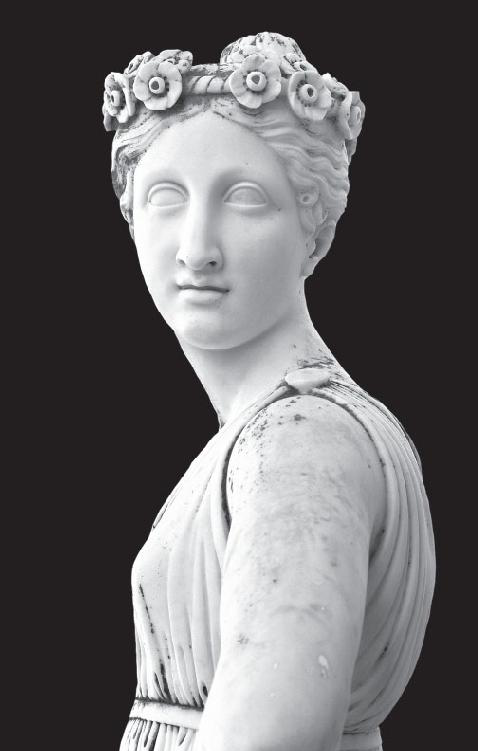 Wisdom, aspiration, action (p42).
Vāstu history
A vidyā stays merely potential until a practitioner emerges to focus it: the practitioner "enlivens the vidyā the way zero enlivens the integers one through nine," the nucleus around which its wisdom constellates (Svoboda ch.2, p44).
 A worthy muse mouthpiece (p45) — the artist as a vessel through whom the muse speaks.
The Vāstu muse has guided Indian builders for thousands of years, since the Vedas or earlier. Of the four Vedas, the Yajur Veda treats sacrifices, and its upaveda (auxiliary body of knowledge) is the Sthāpatya Veda, which fixes the sizes and proportions of fire-altars and ritual implements — and is "often considered to be Vāstu's progenitor." [traditional] In Vedic times, people lived so close to nature that they sensed the rightness and wrongness of spatial arrangements directly; the Vāstusūtra Upaniṣad recalls a people "whole and one with cosmic forces… integrated parts of the universe" [classical]. As nomadic simplicity gave way to urban life, that spontaneous instinct was systematized — shamanic medicine into Āyurveda, sky-watching into Jyotiṣa, and intuitive space-sense into Vāstu, "a grammar for visual forms" (Svoboda ch.2, p46).
 Perfect proportions (p47).
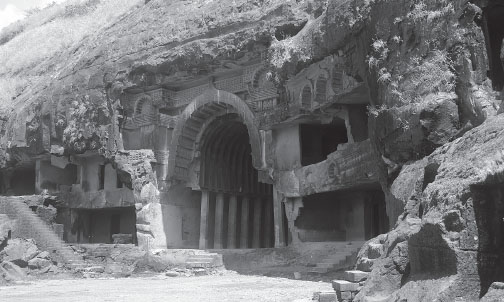 From hill to temple (p47).
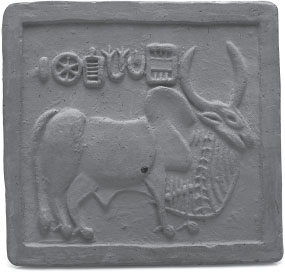
Urbanization had reached northern and western India by the Harappan (Indus Valley) civilization, founded perhaps in the fourth millennium B.C. — its cities grid-planned, houses oriented to the cardinal directions, with efficient sewage; their mud-brick sophistication implies an awareness of Vāstu principles. By the Buddha's time (6th c. B.C.) towns had spread across India; building moved from wood to stone (early rock-cut temples at Ajanta, Ellora, Karla, and Bhaja still imitate wooden ribbed-and-vaulted ceilings). Vāstu and its sisters reached their fullest flowering in India's classical age, roughly 1000 B.C. to 1000 A.D. Later invasions frayed the tradition; some dynasties (the Mughals especially) enriched Indian architecture (the Taj Mahal, Fatehpur Sikri), but British rule deliberately discouraged the traditional lores, and much was lost — Indians were taught to prize Western aesthetics and feel ashamed of their own. Only in the last few decades has Vāstu regained real vigor (Svoboda ch.2, p46–49).
Vāstu texts
Most specialists now agree Vāstu's purpose is to create sacred, convivial spaces for body, mind, and spirit — but they disagree sharply on the details, often predicting catastrophe for the slightest deviation from some rigid plan. Svoboda counsels pluralism: Vāstu is too vast for anyone to embody wholly, and to insist one's own view is the only valid one is the error of the blind men quarrelling over the elephant. "Truth is Singular," runs the Vedic proverb; "the wise speak of it in various ways." [classical] The several (sometimes competing) schools of Vāstu are a legacy of this diversity (Svoboda ch.2, p49–50).
Among the texts, the conceptual basis of Indian art and architecture is set out most clearly in the aphorisms of the Vāstusūtra Upaniṣad (how to use sacred geometry to infuse meaning into sacred art). One of the earliest descriptions of Vāstu proper is a succinct 125-verse chapter of the Bṛhat Saṁhitā ("Big Compendium") of Varāhamihira (5th–6th c. A.D.); most later texts — the prominent Mayamata, Mānasāra, and Samarāṅgaṇa Sūtradhāra — elaborate on what the Bṛhat Saṁhitā introduced. [classical] (These are exactly the classical sources a deeper study of Vāstu architecture would turn to.) Vāstu's major expositions are mostly in Sanskrit — an "engineered" language (saṁskṛta, "well-constructed") whose grammar packs layered meaning into pithy verse, composed in poetry so students could memorize it. To master several thousand verses is to build a saṁskāra — a "thing done well" that reshapes the mind. Vāstu, in this light, is the study of "space saṁskāras": turning ordinary or "aggrieved" spaces into good ones by adjusting their dimensions, shapes, and arrangements (Svoboda ch.2, p50–51).
Books alone can never make a true practitioner, but they give a good introduction that a teacher can later bring to life. (Svoboda intends this book as exactly that — an introduction for the general reader and a text for those with an instructor — best read slowly, "to avoid mental indigestion.") (Svoboda ch.2, p51).
Sampling the Vāstu language
Studying Vāstu in English is harder than in Sanskrit, because turning Sanskrit poetry into English prose damages its flavor; the original verse delivers a taste of the seers' direct experience. Even without knowing Sanskrit you can sound out a verse and enjoy its rhythm, "welcoming the breath of the vidyā" before reading the translation. Svoboda's example, from the Bṛhat Saṁhitā (Svoboda ch.2, p52):
Tat tasya bhavati śubhadaṁ yasya ca yasmin mano ramate. "Any site becomes auspicious for a person, provided that it gladdens his heart." — Bṛhat Saṁhitā 53:95b [classical]
After pages of detail on choosing the ideal site, Varāhamihira concludes that you should simply pick a site that speaks to your heart: your intuitive impression counts for more than rational calculation, and a site you love will summon the energy to overcome its problems. Svoboda extends the same advice to the book itself — where a concept is hard, "listen to the words with your heart instead of your mind," letting nuance and image carry you past intellectual understanding into feeling what is true for you, until head, heart, and prāṇa cooperate and sukha begins to flow (Svoboda ch.2, p52–53).